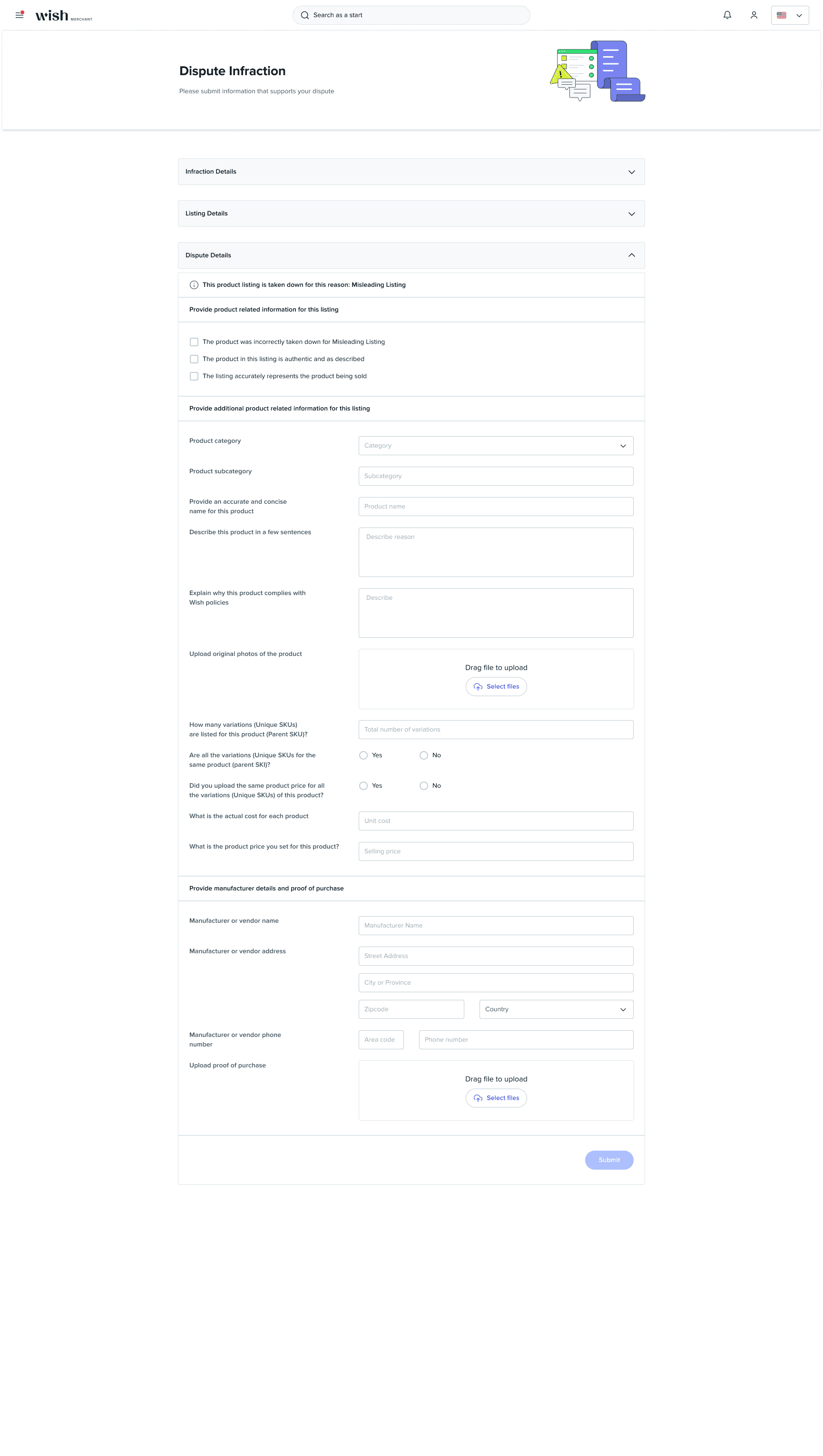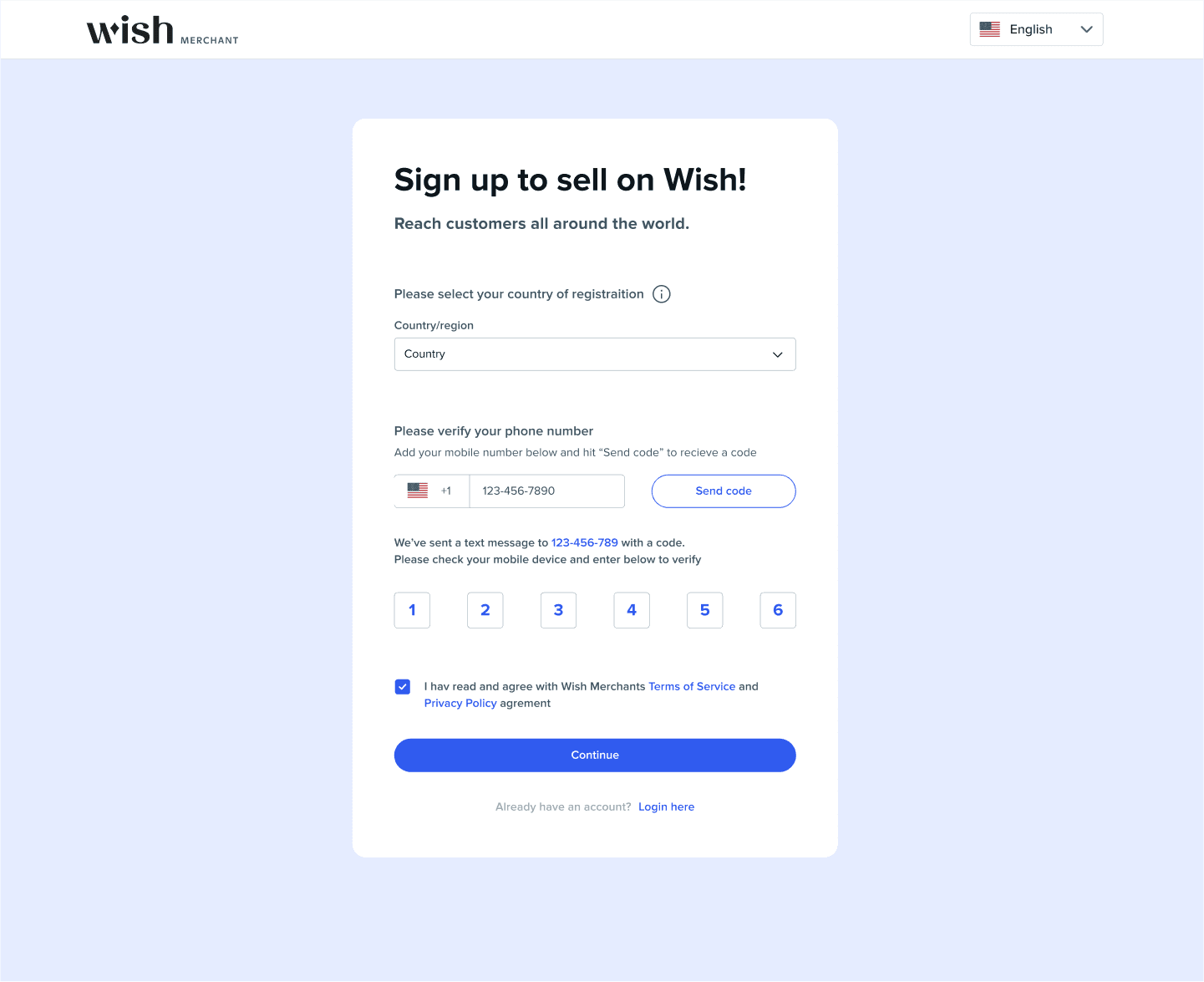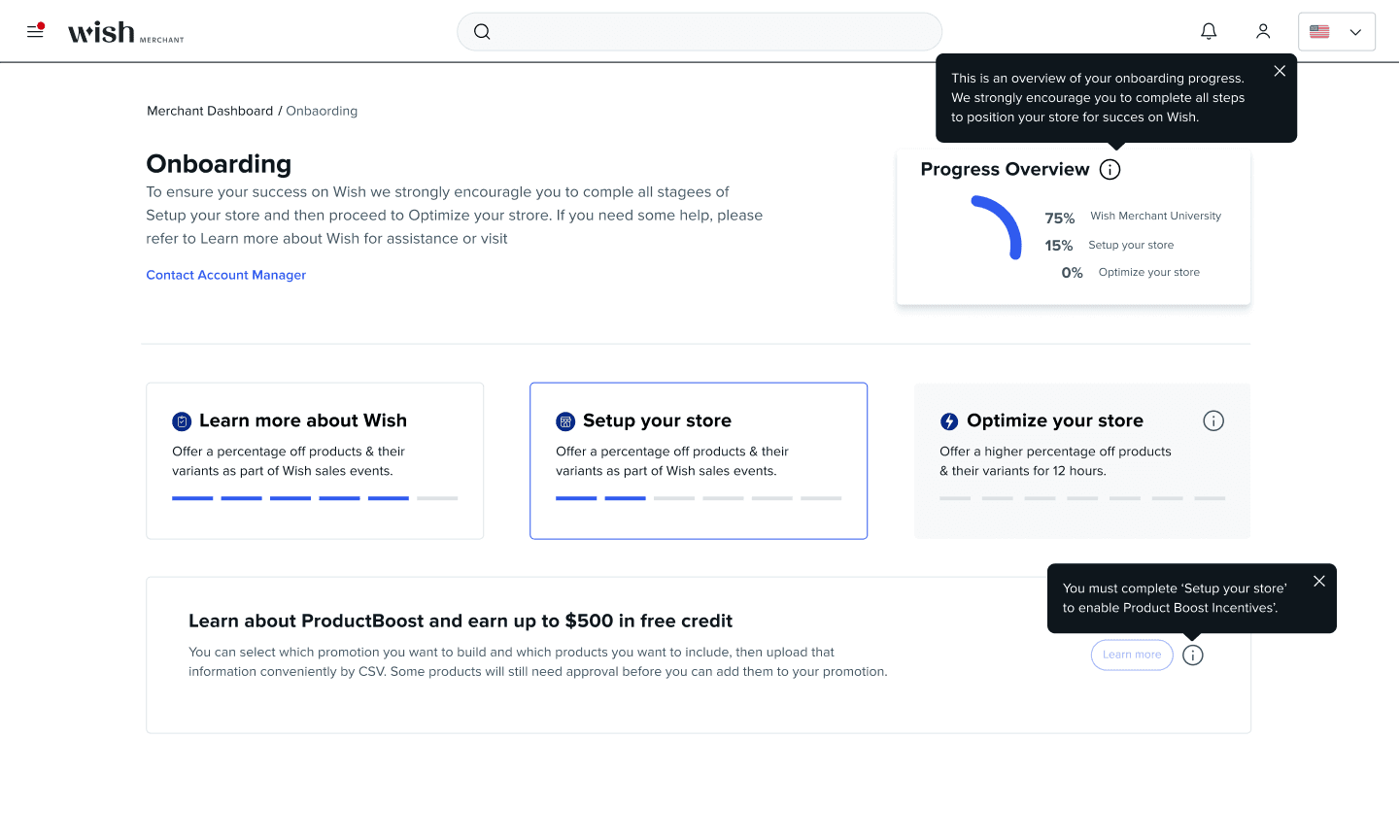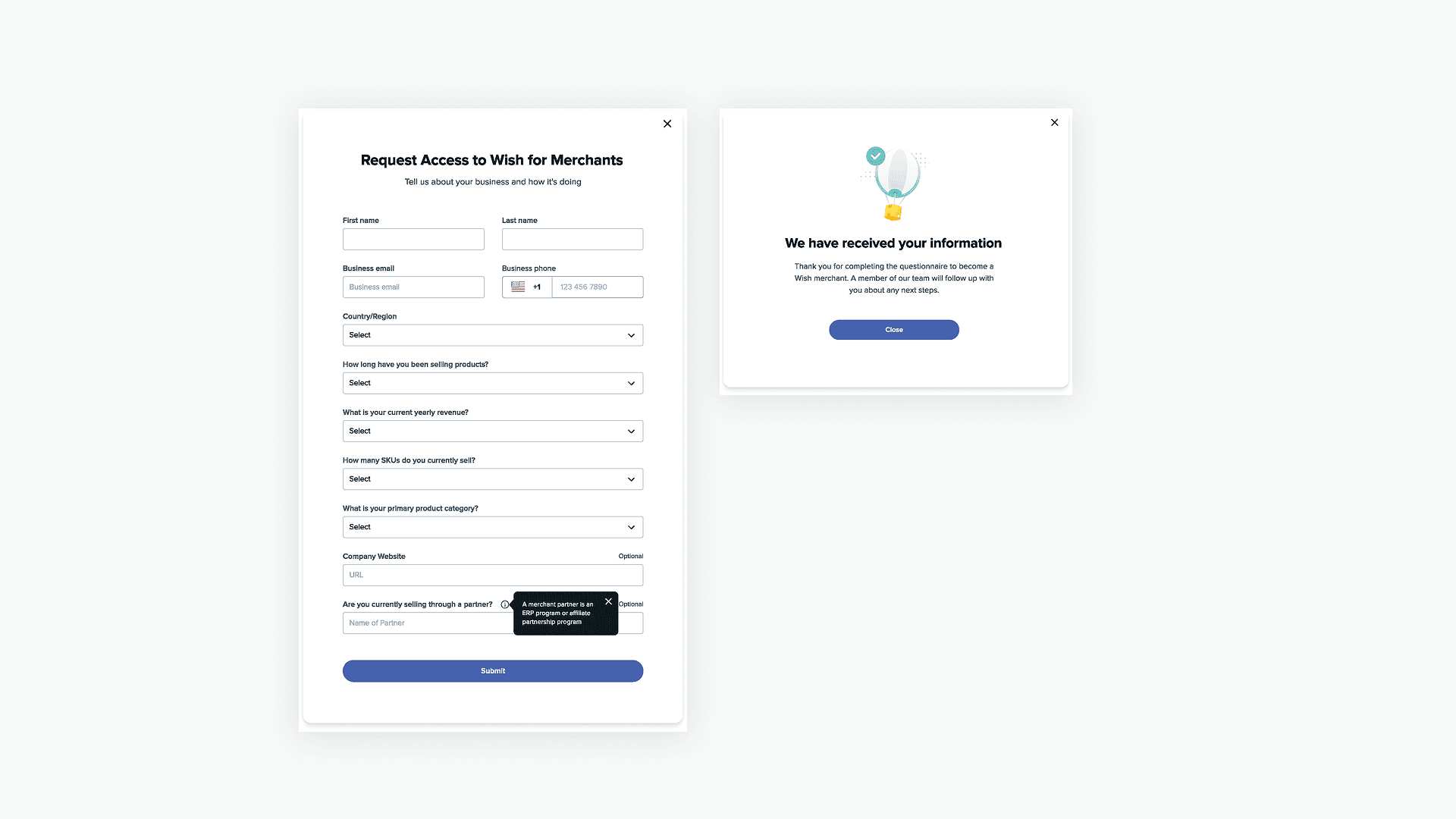

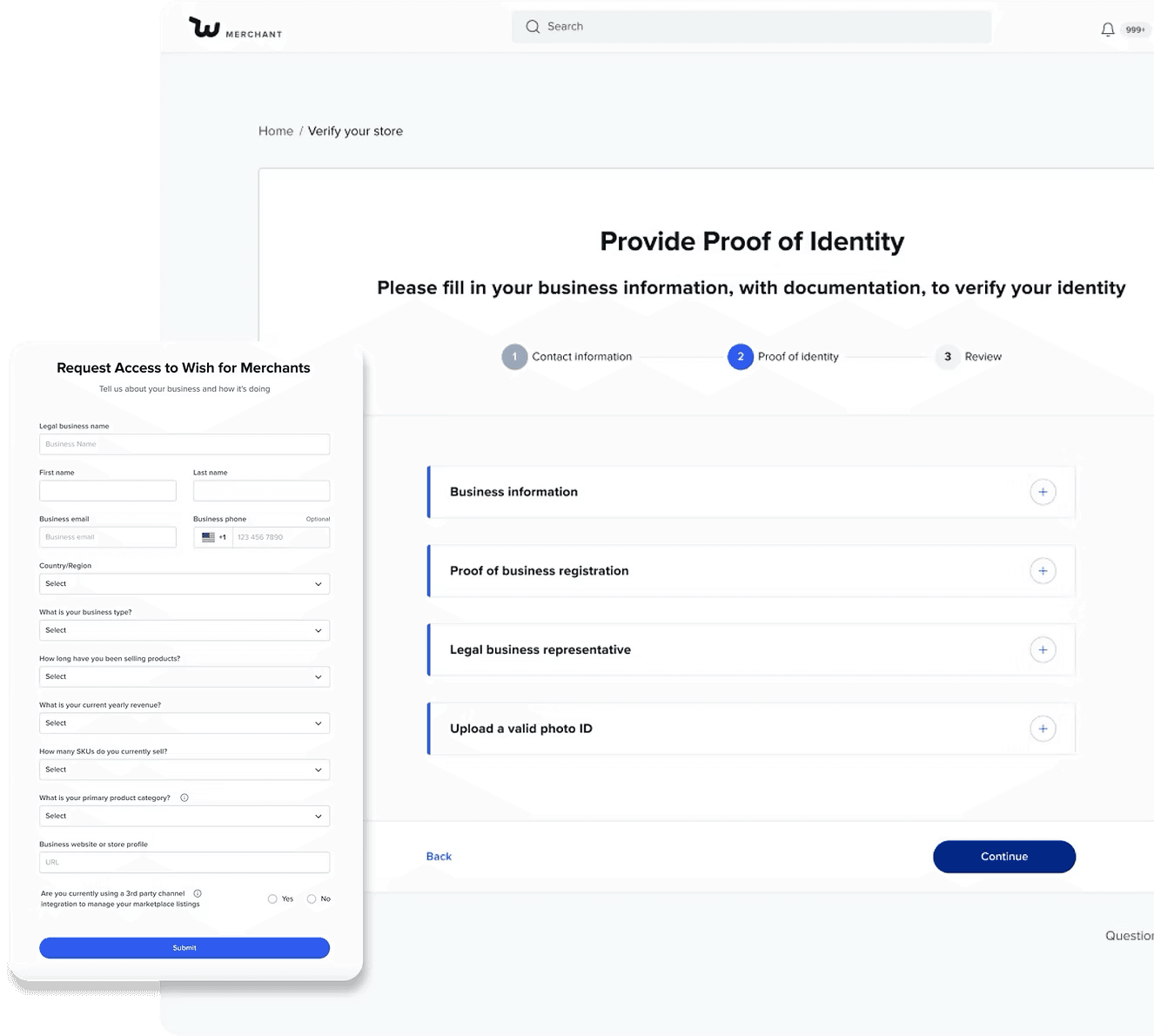
At Wish, I redesigned merchant onboarding and verification flows that were creating confusion, drop-off, and operational drag.
I focused on improving merchant activation by reducing rework, surfacing requirements earlier, and structuring the experience so merchants could complete critical setup steps with clarity and confidence.
Challenge
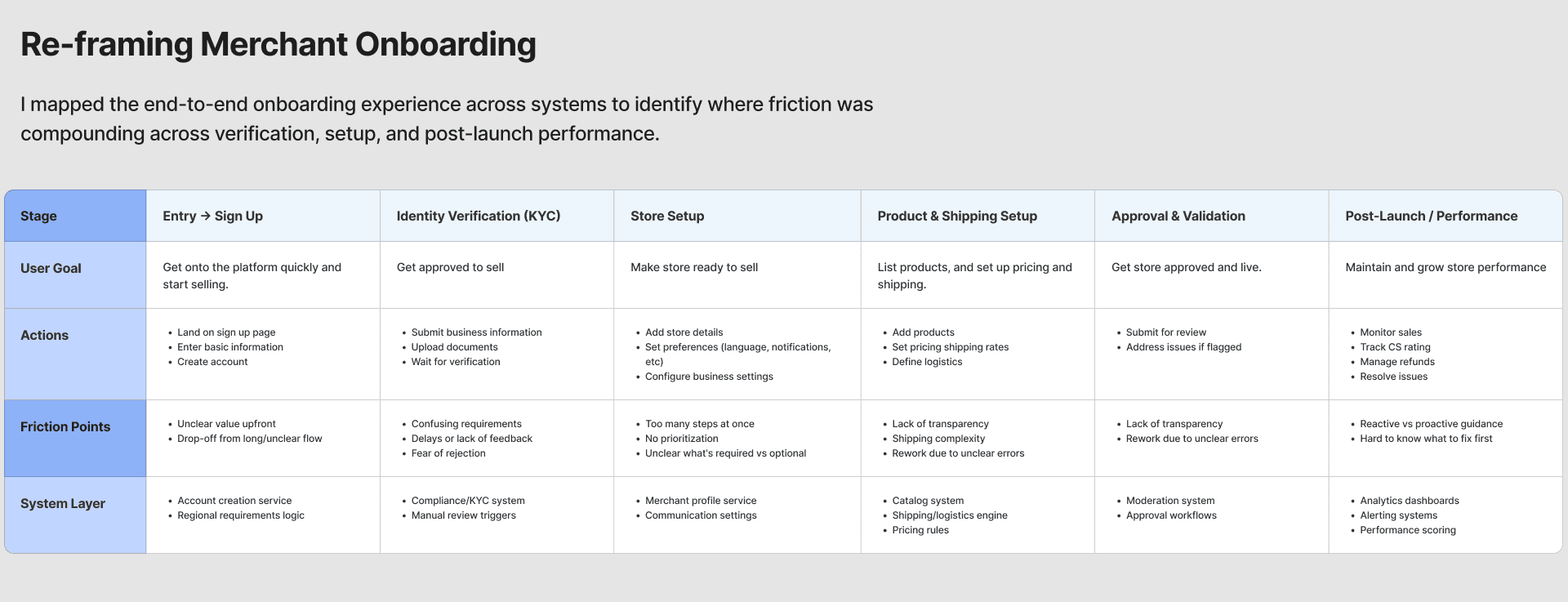
Merchant onboarding was fragmented across multiple steps, policy communication was unclear, and verification states were hard to interpret. Merchants were getting stuck, internal teams were handling avoidable friction, and the product experience was not matching the operational reality behind enforcement and compliance.
Opportunities Identified
Flag incomplete setup earlier to prevent submission failure.
Guide merchants through high-friction steps to reduce drop-off.
Surface performance risks earlier to prevent downstream issues.
Provide clear approval status and rejection reasons to eliminate rework.
Key Insights
Onboarding friction compounded across verification, setup, and approval rather than existing in a single step.
Merchants lacked clear prioritization, leading to delays in completing high-impact setup tasks.
System dependencies introduced delays that were not visible within the interface.
These gaps were directly contributing to drop-off, delayed activation, and increased support overhead
Key Decisions & Tradeoffs
Prioritized early risk detection over post-submission fixes
Instead of optimizing error handling after submission, I focused on surfacing issues earlier to reduce failure rates and rework.
Simplified setup over flexibility
There was an opportunity to support more customization, but I prioritized guided, opinionated steps to reduce drop-off during onboarding.
Centralized feedback instead of distributing it across steps
Rather than showing fragmented status updates, I pushed for clear, centralized visibility into approval status and next steps.
Designing for Clarity, risk, and Completion
The core issue in the merchant onboarding flow is that users don’t understand why they’re being blocked or what to do next. Instead of treating errors and guidance as separate features,
I structured the experience around three key moments:
1. Early Risk Detection:
Potential issues like CS rating or incomplete requirements are surfaced before submission to prevent failure later.
2. Guided Completion:
Complex setup is broken into clear, actionable steps so merchants always know what’s required.
3. Transparent Feedback:
Approval status, reasons for rejection, and next steps are clearly communicated to remove ambiguity.
By restructuring the experience this way, onboarding becomes clearer, faster to complete, and less dependent on reactive support. This shifted the experience from reactive (fixing errors after failure) to proactive (guiding users toward successful completion).
Results
The redesign increased merchant verification completion by 41%, reduced onboarding and training time by 25% through clearer and more localized UI patterns, and improved dispute and infraction workflow conversion from 4% to 45%.
Key Metrics
increase in verification completion
41%
reduction in onboarding and training time
25%
improvement in dispute and infraction workflow conversion
4% to 45%