

Turning Strategy Into Stories That Win Business
Turning Strategy Into Stories That Win Business
Turning Strategy Into Stories That Win Business
Designing enterprise-level creative systems to align global stakeholders
Developed strategic frameworks to improve narrative clarity across teams.
Developed strategic frameworks to improve narrative clarity across teams.
Developed strategic frameworks to improve narrative clarity across teams.

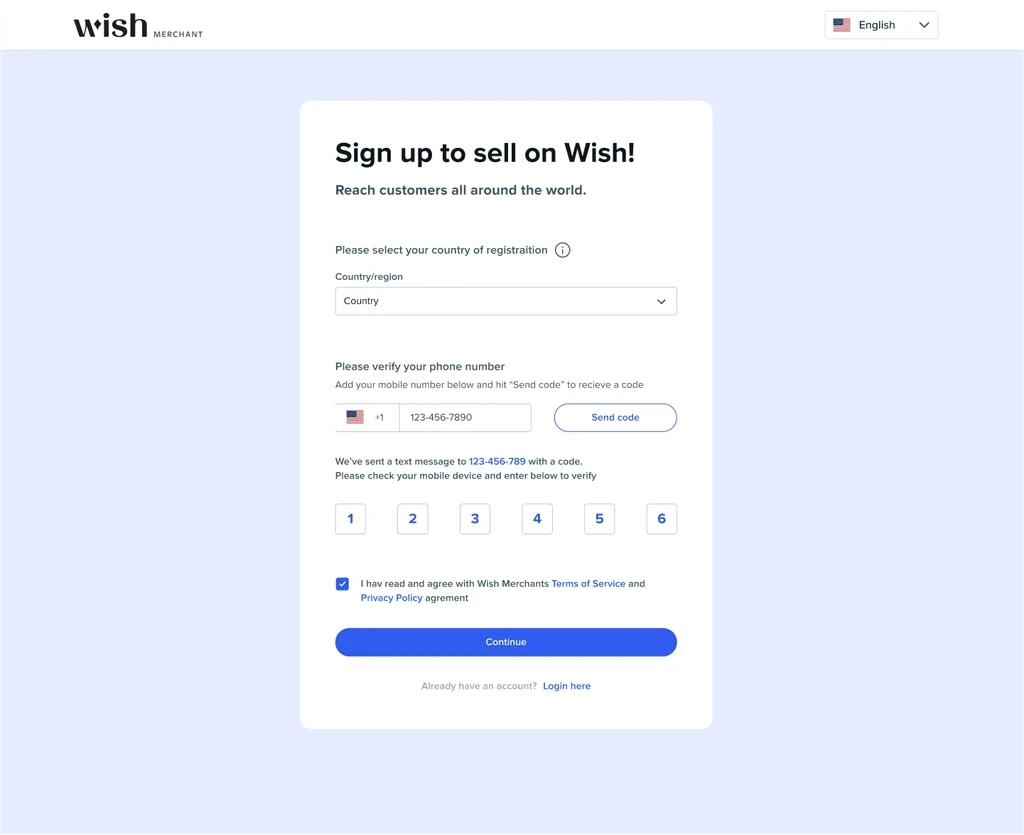
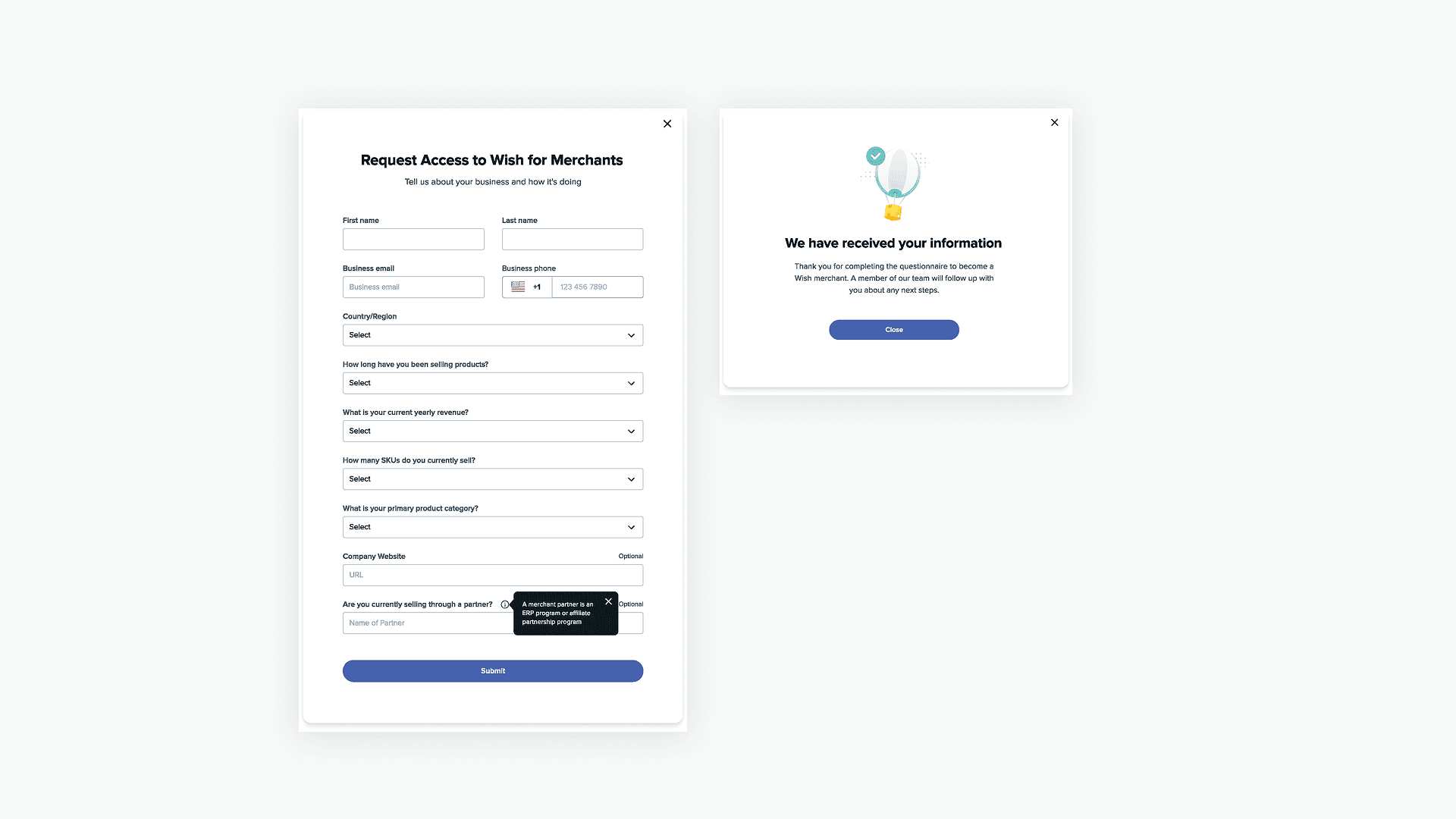
At Wish, I redesigned merchant onboarding and verification experiences to reduce friction, improve transparency, and help merchants reach activation faster. By surfacing requirements earlier and clarifying next steps, I streamlined complex compliance workflows without compromising trust and safety.
At Wish, I redesigned merchant onboarding and verification flows that were creating confusion, drop-off, and operational drag. I focused on improving merchant activation by reducing rework, surfacing requirements earlier, and structuring the experience so merchants could complete critical setup steps with clarity and confidence.

+20%
Merchants in Silver Status
Product Designer
Led the end-to-end UX redesign of onboarding, verification, and dispute workflows, focusing on improving merchant activation by reducing drop-off and rework across onboarding.
This work addressed a systemic breakdown between user experience and backend logic. I restructured the flow to make requirements clearer, surface issues earlier, and align the experience with how the system actually operates—reducing friction for merchants while lowering support overhead for internal teams.
The Challenge
As Wish expanded globally, onboarding merchants became increasingly complex — but the deeper problem wasn't complexity. It was that Wish was losing legitimate merchants before they ever made a sale.
New compliance requirements, verification checks, and enforcement processes introduced friction at every stage. Sellers couldn't tell where they were in the process, why they were flagged, or what to do next. The result was drop-off, mounting support requests, and a Silver+ merchant tier that barely anyone was reaching — not because the program lacked value, but because the path to it was invisible.
At scale, that's not a UX problem. It's a revenue problem.


Opportunities Identified
Opportunities Identified
Opportunities Identified
Through journey mapping, support ticket analysis, and cross-functional collaboration with Product, Risk, Compliance, and Merchant Support teams, several recurring patterns emerged:
Through journey mapping, support ticket analysis, and cross-functional collaboration with Product, Risk, Compliance, and Merchant Support teams, several recurring patterns emerged:

Critical setup issues were discovered too late — forcing merchants to restart steps they'd already completed, eroding trust before activation even began.
Verification requirements lacked context — merchants didn't know what was being asked of them or why, which created uncertainty that looked like resistance but was actually confusion.
System dependencies were invisible — approval timelines felt arbitrary because merchants had no visibility into what was waiting on what.
Rejection reasons were unclear — merchants couldn't act on feedback they didn't understand, generating avoidable support volume and rework on both sides.
The through-line across all four: merchants weren't failing the system. The system was failing them.
The through-line across all four: merchants weren't failing the system. The system was failing them.

Key Decisions & Tradeoffs
Key Decisions
& Tradeoffs
Designing for compliance often means introducing additional requirements for users. The challenge was determining where friction was necessary and where it could be reduced.
Prioritized early risk detection over downstream corrections
Rather than allowing merchants to progress through onboarding only to encounter failures later, we surfaced potential issues earlier in the journey. This increased upfront guidance while reducing costly rework and support escalations.
Optimized for clarity over flexibility
While more flexible workflows could accommodate a wider range of merchant scenarios, they also increased cognitive load and inconsistency. We standardized key flows to create a more predictable onboarding experience.
Centralized feedback and account status communication
Instead of distributing errors, warnings, and approval updates across multiple screens, we consolidated critical information into a single source of truth. This helped merchants understand what actions were required and reduced confusion throughout the process.
Prioritized early risk detection over downstream corrections
Awarded by Digital Excellence
Optimized for clarity over flexibility
Awarded by Digital Excellence
Centralized feedback and account status communication
Awarded by Digital Excellence
Key Insights
Our team designs hyper-targeted strategies that don’t just reach audiences, but move them to act and engage.
Onboarding friction compounded across verification, setup, and approval rather than existing in a single step.
Merchants lacked clear prioritization, leading to delays in completing high-impact setup tasks.
System dependencies introduced delays that were not visible within the interface.
These gaps were directly contributing to drop-off, delayed activation, and increased support overhead


Key Insights
The biggest onboarding challenges were rarely caused by a single screen or interaction. Friction accumulated across verification, account setup, compliance reviews, and approval workflows.
Several patterns became clear:
Key Insights
Our team designs hyper-targeted strategies that don’t just reach audiences, but move them to act and engage.
Merchants struggled when they could not distinguish between high-priority and low-priority tasks.
Hidden system dependencies created delays that merchants could not anticipate or understand.
Lack of visibility into review status increased support inquiries and slowed progress toward activation.
Small moments of uncertainty compounded over time, leading to abandonment before merchants ever reached their first successful listing.
These findings reinforced the importance of transparency, guidance, and system visibility throughout the onboarding experience.
Designing for Clarity, risk, and Completion
Designing for Clarity, risk, and Completion
The core issue in the merchant onboarding flow is that users don’t understand why they’re being blocked or what to do next. Instead of treating errors and guidance as separate features,
The core issue in the merchant onboarding flow is that users don’t understand why they’re being blocked or what to do next. Instead of treating errors and guidance as separate features,
I structured the experience around three key moments:
I structured the experience around three key moments:
Early Risk Detection:
Potential issues like CS rating or incomplete requirements are surfaced before submission to prevent failure later.
Guided Completion:
Complex setup is broken into clear, actionable steps so merchants always know what’s required.
Business Solutions
Complex setup is broken into clear, actionable steps so merchants always know what’s required.
Lead Generation
Optimize advanced funnels, automate processes, and boost customer conversions to generate leads.
By restructuring the experience this way, onboarding becomes clearer, faster to complete, and less dependent on reactive support. This shifted the experience from reactive (fixing errors after failure) to proactive (guiding users toward successful completion).
By restructuring the experience this way, onboarding becomes clearer, faster to complete, and less dependent on reactive support. This shifted the experience from reactive (fixing errors after failure) to proactive (guiding users toward successful completion).

Results
The redesign delivered measurable impact across the full merchant journey:
41%
increase in merchant verification completion
4% to 45%
dispute and infraction workflow conversion
25%
reduction in onboarding and training time through clearer, more localized UI patterns
73%
increase in merchants listing products within their first 10 days
Results
The redesign increased merchant verification completion by 41%, reduced onboarding and training time by 25% through clearer and more localized UI patterns, and improved dispute and infraction workflow conversion from 4% to 45%.
41%
increase in merchant verification completion
4% to 45%
dispute and infraction workflow conversion
25%
reduction in onboarding and training time through clearer, more localized UI patterns
73%
increase in merchants listing products within their first 10 days
Results
The redesign increased merchant verification completion by 41%, reduced onboarding and training time by 25% through clearer and more localized UI patterns, and improved dispute and infraction workflow conversion from 4% to 45%.
Designing for Clarity, risk, and Completion
The core issue in the merchant onboarding flow is that users don’t understand why they’re being blocked or what to do next. Instead of treating errors and guidance as separate features,
I structured the experience around three key moments:
Early Risk Detection:
Potential issues like CS rating or incomplete requirements are surfaced before submission to prevent failure later.
Business Solutions
Complex setup is broken into clear, actionable steps so merchants always know what’s required.
Lead Generation
Optimize advanced funnels, automate processes, and boost customer conversions to generate leads.
At Wish, I redesigned merchant onboarding and verification flows that were creating confusion, drop-off, and operational drag. I focused on improving merchant activation by reducing rework, surfacing requirements earlier, and structuring the experience so merchants could complete critical setup steps with clarity and confidence.
+20%
Merchants in Silver Status
Product Designer
Led the end-to-end UX redesign of onboarding, verification, and dispute workflows, focusing on improving merchant activation by reducing drop-off and rework across onboarding.
This work addressed a systemic breakdown between user experience and backend logic. I restructured the flow to make requirements clearer, surface issues earlier, and align the experience with how the system actually operates—reducing friction for merchants while lowering support overhead for internal teams.




O'Nysha Thomas
Want to collaborate or strategize with me?
Let’s make something dope together.
Contact Me
Pure O'Nyx © 2026
O'Nysha Thomas
Want to collaborate or strategize with me?
Let’s make something dope together.
Contact Me
Pure O'Nyx © 2026
O'Nysha Thomas
Want to collaborate or strategize with me?
Let’s make something dope together.
Contact Me
Pure O'Nyx © 2026